

Juniper sheds year round. That is not a complaint, just a fact about living with a 6-year-old mixed breed who weighs about 45 pounds and follows the sun across the living room floor from mid-morning until dinner. By the time I ordered the Easy-Going reversible couch cover, my cream linen sofa had a gray shadow worked into the seat cushions and a ladder of loose threads along one arm where Pip had decided the upholstery was his. I am picky about fabric. I spent nine years as a residential stylist and I have talked more clients out of slipcovers than into them.
What changed my mind was not the cover itself but the arithmetic of the alternative. A sofa I love, in a house with a shedding dog and a 9-year-old cat with claws, either gets protected or gets replaced. I had already tried the cheap version of protection. A woven throw that slid off every time Juniper jumped up. A fitted stretch slipcover that popped off the back corners within a week and left me on the floor wrestling it like a fitted sheet that had given up on life.
The Quick Verdict
A quilted, reversible sofa cover that takes shed hair, cat claws and the occasional mug of tea without the wrestling match of a fitted slipcover. It is not waterproof and it is not tailored, so buy it for the protection, not for a custom upholstered look.
Amazon Check Today's Price →The 66-Inch Seat Width Is the Number That Matters. Measure That One First.
Easy-Going sizes this cover by seat width, not by the overall length of your sofa, and that single difference is what separates a cover that tucks neatly from one that puddles on the floor. Measure across one seat cushion, multiply by your cushion count, and check the total against the fit guide in the listing photos before anything else.
Amazon Check Today's Price on Amazon →How I've Used It
The cover has been on my sofa since early spring. Three-cushion sofa, seat width comfortably inside the 66-inch limit Easy-Going lists, and a large size that drapes from the backrest down to just above the floor. For the first week I left it loose to see how it behaved on its own. It crept about an inch a day, always in the same direction, always where Juniper lands. Then I started tucking, and the creeping stopped.
Tucking is the entire technique with this cover. You drape it, then push the extra fabric down into the crease where the seat meets the back and where the seat meets each arm. The listing says exactly that, and it undersells how much difference it makes. Once the fabric is wedged into those gaps, the cover stops sliding, the sofa reads as upholstered rather than covered, and the telltale draped-throw look that gives a cover away in photographs mostly disappears.
I flip it every couple of weeks because it is reversible and because the seat takes more traffic than the backrest. Two plain quilted faces, one on each side, and flipping spreads the wear instead of concentrating it in the middle. Pip treats the back cushions as a highway. Juniper treats the seat as a bed. Flipping means neither of them gets to destroy the same square foot of fabric twice.
The Fabric Up Close
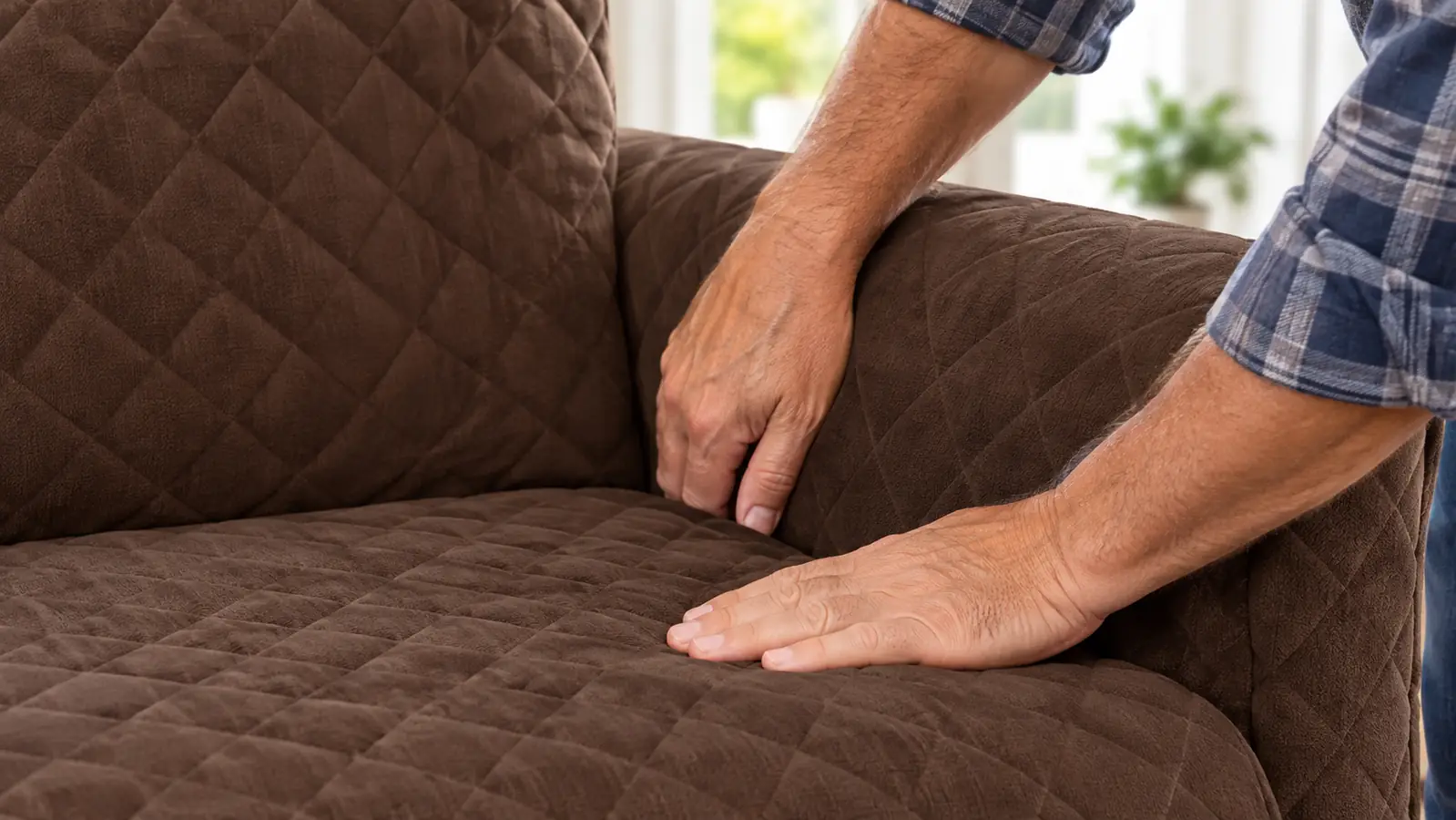
The cover is three layers quilted together into a single panel, thick microfiber on the outside with a quilted texture that reads closer to a good bedspread than to a furniture throw. It is polyester, it is colorfast, and Easy-Going describes the surface as water resistant. All of it is 2 pounds of fabric, which sounds flimsy until you remember that a fitted stretch slipcover is thinner still and a woven blanket is heavier and slides. Two pounds is the range where a cover stays put once tucked but still moves when you want it to.
The quilting does more work than the material itself. Shed hair does not slide across a flat polyester surface, it settles. On a quilted one, hair collects in the stitched channels, which means it stays in predictable lines instead of distributing itself evenly across your cushions. That is a small thing that becomes a large thing when you are vacuuming a cream sofa twice a week. I run the upholstery attachment over it on Sundays and the stitching lines give up their hair in one pass.
The thickness also buys a little cushioning, which matters if your sofa is older and the seat foam has started to give. It is not a topper and it will not fix a collapsed cushion. It does soften the feel of a seat that has seen fifteen years of use, and it keeps claws and grit from working deeper into the upholstery underneath.
Living With a Shedding Dog and a Scratching Cat
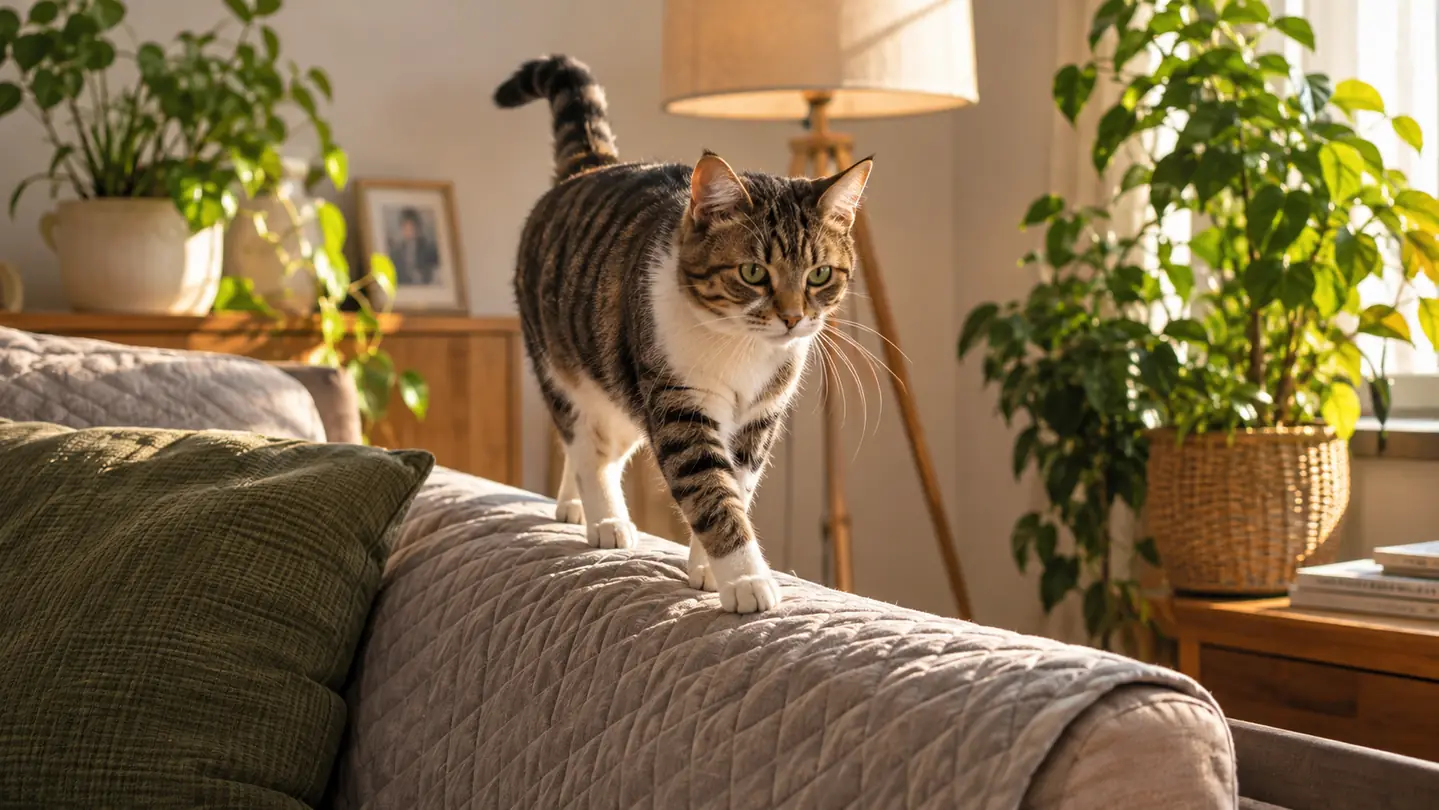
Here is the honest part about a house with both a dog and a cat: the cover does not stop Juniper from shedding and it does not stop Pip from scratching. What it does is move both problems onto a piece of fabric that costs a fraction of a sofa and can go in a washing machine. The cream linen underneath is still cream. The threads on that one arm have not gotten any worse since the cover went on, because Pip now digs into quilted microfiber instead.
Pip still launches off the seat back at a full sprint, and the cover takes it. I found one small snag near the corner where he pushes off, a single loop of thread pulled up, and I trimmed it with nail scissors and it has not run. That is roughly what I expected from a quilted surface under a cat. If you have a determined scratcher who goes at the same corner every day, expect a snag eventually. What you are buying is time before the sofa itself is the thing being shredded.
Spills are where water resistant earns its keep and where you need to be clear-eyed about the wording. A mug of tea went over on a Saturday in June. It beaded on the surface for about a minute, long enough for me to get a dish towel and blot it rather than press it. Water resistant means you have time. It does not mean you can leave a spill overnight. Anything that sits will eventually work through the quilting, so blot first and wash later.
How it looks is the part I was prepared to hate. It does not look like upholstery. It looks like a well-made quilted cover, which is a different thing, and on a plain sofa in a room with light oak floors and a lot of natural texture it reads as deliberate. My husband thought I had bought a new throw. My neighbor asked where the sofa went. On a formal sofa in a formal room it would look like what it is. In a family living room it disappears into the room.
Six months in, the only mark on my sofa is the one Pip put there before the cover went on.
Fit, Tucking, and Those Ties
Easy-Going lists the cover at 23 inches deep by 66 inches wide by 40 inches high and rates it for a seat width up to 66 inches. That last number is the one to measure. Seat width means across the cushions side to side, not the full outside width of the sofa including the arms. If your three-cushion sofa measures wider than the fit guide allows, the cover will not reach around the arms properly no matter how carefully you tuck.
The closure is ties, not elastic and not a zipper, which is the right call for this design. You drape, you tuck, and you tie the back corners so the whole panel does not walk forward when someone pushes up off the seat. I tied mine around the back frame and it has not come loose once in months. If you skip the ties, you are choosing to re-drape the back of the cover every few days.
The tradeoff of a drape-and-tuck cover is that it is one shape trying to fit many sofas. On mine it looks close to fitted. On a smaller sofa the same large size would puddle and you would be tucking a lot more fabric into the same creases, which works but shows. Measure, then buy the size the chart points to rather than the size that sounds safest.
Washing It: The Part I Expected to Go Wrong
The care instructions are machine wash at around 30 degrees Celsius, mild detergent, no bleach. I have followed that exactly because the fastest way to ruin quilted microfiber is a hot wash and a bottle of something aggressive. It has been through the machine several times now. The color has not shifted on either face, which is what colorfast is supposed to mean, and the stitching has not puckered or pulled at the corners.
I hang it over the porch rail to dry rather than putting it in the machine, mostly because I would rather not test a claim the instructions do not make. It dries in a couple of hours in Asheville afternoon sun and goes back on the sofa the same day. The quilted channels come out of the wash looking like they did going in, which is the thing I check first on anything quilted, because a bad wash turns quilting into a rumpled mess permanently.
The one maintenance habit worth building is shaking it out before it goes in the machine. Dog hair that has collected in the stitching will come off in the wash and end up in your lint trap, which is fine, but shaking it outside first keeps the machine cleaner and keeps hair out of the rest of the load. Thirty seconds on the porch rail before the wash. That is the whole routine.
Where It Falls Short
It is water resistant, not waterproof. A spilled drink gives you about a minute to blot. A dog who comes in wet and lies down will leave dampness through the quilting and you will be washing the cover, not just toweling it off. If your main problem is a senior dog with bladder accidents, this cover is a barrier that buys you time to clean, not a sealed surface, and you should know that going in rather than after the first accident.
It also is not a fitted slipcover and it never will be. The back corners need a re-tuck every week or so if your house is like mine, and anyone who sits down hard will push the seat fabric forward. The pattern is a plain solid quilted face, so if you were hoping for a print that hides a stain, this is not that. And it will not give a sagging sofa structure. It protects what you have. It does not rebuild it.
What I Liked
- Quilted three-layer fabric takes shed hair and claw marks that would otherwise go into your upholstery
- Reversible, so you can flip it and spread the wear instead of wearing out one seat
- Water resistant enough to blot a spilled drink before it soaks through
- Ties at the back corners stop the cover walking forward when people push up off the seat
- Machine washable at 30 degrees Celsius and it has come through several washes without puckering
- Light enough at 2 pounds to drape and re-tuck alone in under a minute
Where It Falls Short
- Not waterproof, so a wet dog or an overnight spill will soak through the quilting
- Drape-and-tuck fit needs a re-tuck at the back corners roughly once a week
- One small snag at the launch corner from a cat who pushes off hard
- Plain solid quilted face, no print to disguise a stain
- Wider sofas than the 66-inch seat width limit will not fit properly no matter how you tuck
Who This Is For
This is for the household with a dog that sheds and a cat with claws, and a sofa worth protecting. It suits a three-cushion sofa inside the 66-inch seat width, in a room where a quilted cover will read as texture rather than as a compromise. It suits anyone who has already tried a woven throw that slid off and a fitted slipcover that popped its corners, and who wants something they can put on alone in a minute and wash on a Sunday. It also suits renters and anyone with a sofa they do not own outright, because it protects without altering anything underneath.
Who Should Skip It
Skip it if your problem is liquid rather than hair. A puppy in housetraining, a senior dog with accidents, a household where drinks go over weekly: you want a waterproof barrier, and this is not that. Skip it if your sofa is wider than the listed seat width, because the fit will fight you every day. Skip it if you want the tailored look of a genuine fitted slipcover, since this is a drape-and-tuck cover and it behaves like one. And skip it if you are not willing to tuck it in properly the first time. Half the complaints about covers like this come from people who laid one over the cushions and walked away.
Measure Your Seat Width, Then Put the Easy-Going Cover Between Your Sofa and Your Dog
Everything this cover does well starts with the fit. Check your seat width against the listing guide, pick the size it points to, and tuck the extra fabric into the creases on day one. That is the whole installation, and it takes about a minute.
Amazon Check Today's Price on Amazon →