
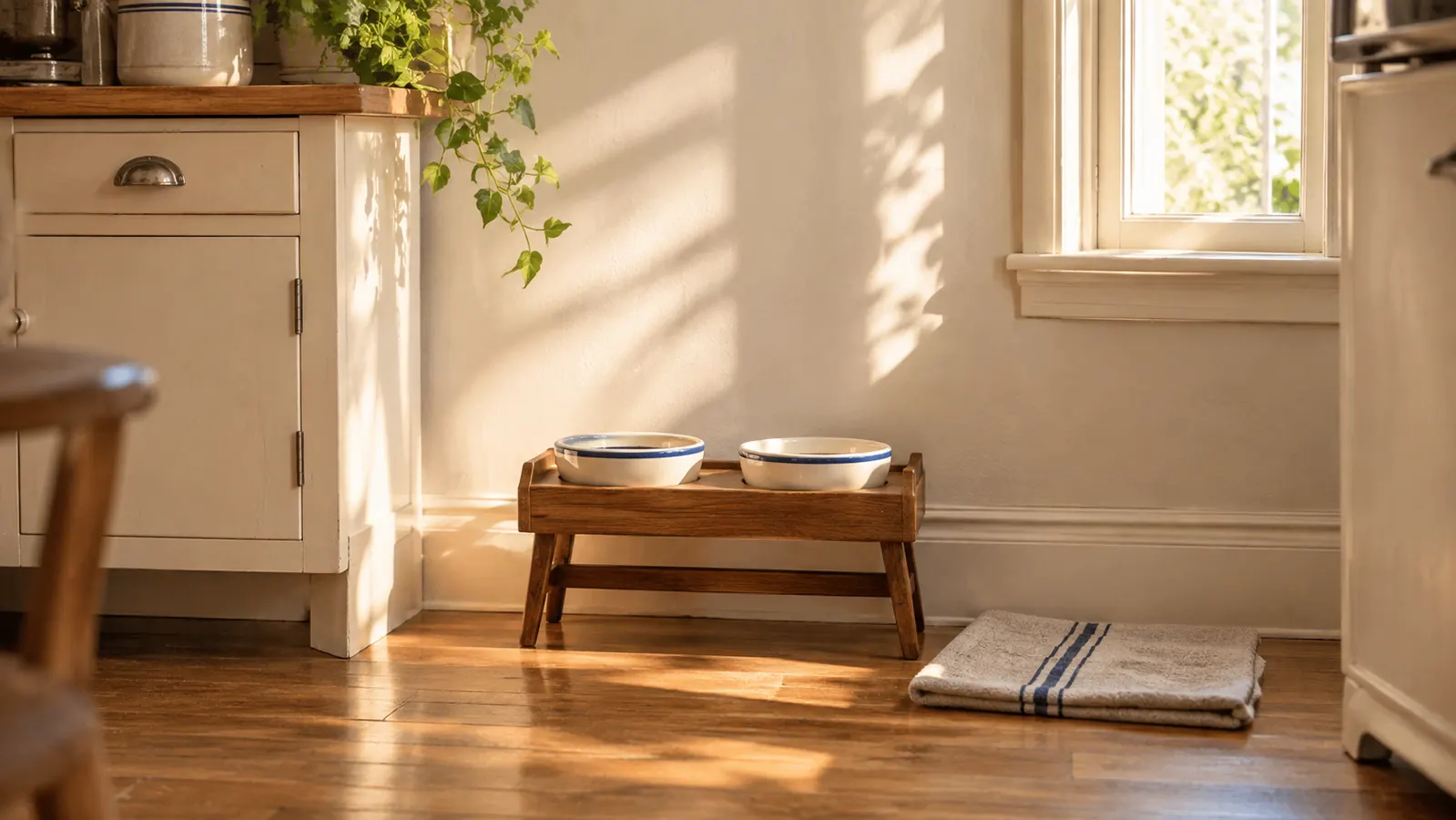
There is a particular kind of ugliness that only shows up in a house with pets: a plastic bowl on a rubber mat, shoved against the wall, with a ring of kibble dust around it. I lived with that for years. Juniper, my 45 pound mixed breed, used to nudge his bowl across the oak floor while he ate, and Pip, my nine year old cat, would drink from whatever puddle it left behind. Then I started paying attention to what actually works. The set I keep coming back to is the AHX elevated ceramic bowl set, and the reason is not that it is pretty. It is that a feeding station only looks good once it stops making a mess.
Here is what I learned after reworking three rooms around one dog and one cat. You cannot style your way out of a bad feeding setup. A linen mat under a bowl that skids will be a bunched up linen mat by Tuesday. A dish next to a wall that gets splashed will wear a tide line on the paint. The mechanics have to be solved first, and then the styling takes about ten minutes. The AHX set solves more of the mechanics than most, because it puts two bowls, a raised stand, and a splash wall into one footprint that measures 14.5 inches long and 7.5 inches deep.
The station that ends the nightly bowl chase
Two ceramic bowls, a raised non slip stand, and a high wall splash guard in one 14.5 inch footprint. This is the piece I build the rest of the corner around.
Amazon See the AHX Elevated Bowl Set on Amazon →Setting It Up, Step by Step
Step 1: Tape the footprint before you commit to a corner
The footprint is the whole game, and it is the step everyone skips. The AHX stand measures 14.5 inches long, 7.5 inches deep, and 4.4 inches high, and it weighs a little over a pound empty. Lay a rectangle that size on the floor with painter's tape before you buy anything else. Then walk your normal path through the kitchen three times and see what you hit. In my first apartment the tape landed exactly where the dishwasher door opened, which is the kind of thing you only notice after a bowl of water has been launched across the room.
The rectangle also has to clear the things you never think about. Cabinet doors, the swing of the refrigerator, the spot where the grocery bag gets set down on the way in, the path a cat takes at four in the morning. Leave at least four fingers of clearance on the ends so you can lift a bowl out without dragging it sideways against a wall. In my 1940s bungalow the tape ruled out the wall by the refrigerator in about ninety seconds. The corner beside the pantry, which I had written off as too narrow, fit the 14.5 inches with room left over for a mat.
One measurement people forget is the baseboard. A stand that sits flush against a wall will either clear the baseboard or lean on it, and a leaning stand is a wobbly stand. The AHX base is shallow enough at 7.5 inches that it tucked in front of mine without a wobble, but if your baseboard is unusually tall, measure from the floor to the top of it first and check that the splash wall still lands where you want it.
Step 2: Pick the wall for the splash, not for the view
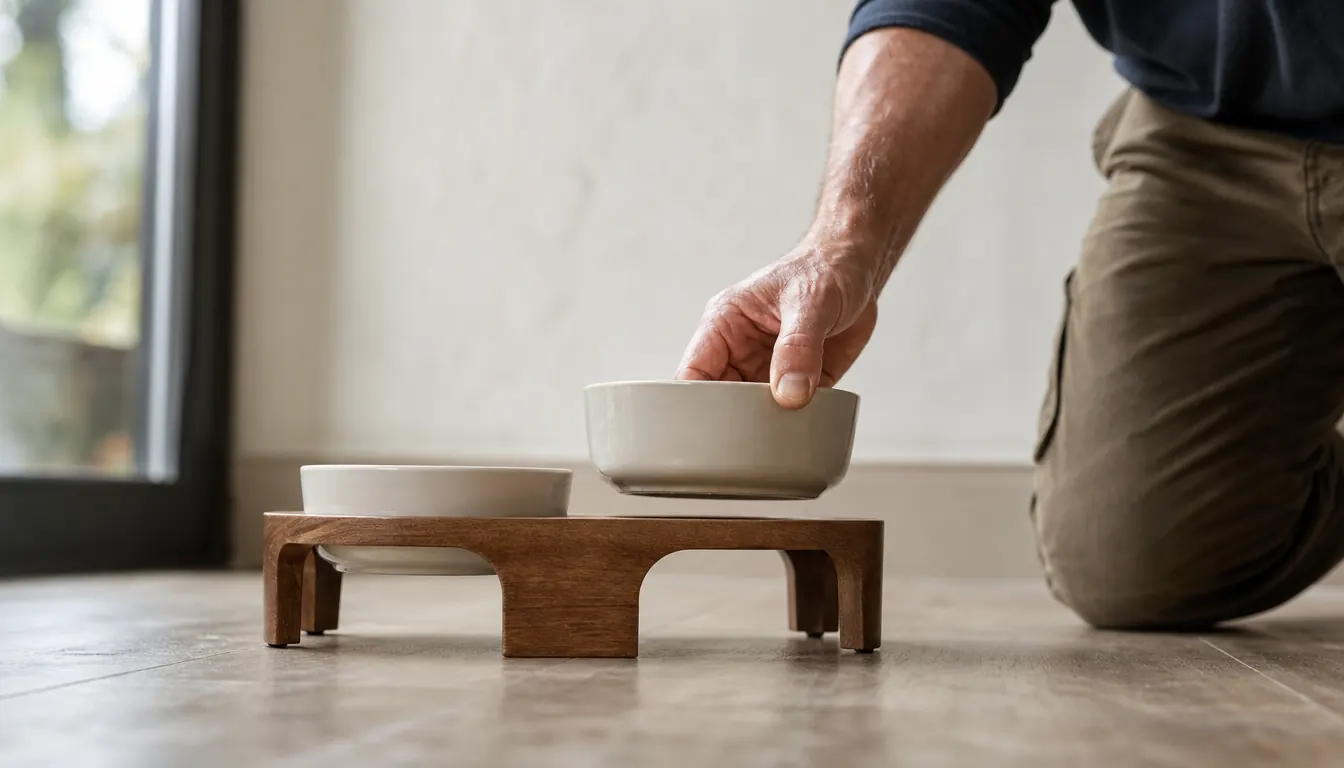
A feeding station gets splashed. Not dramatically, just constantly, a little water flicked out of the bowl every time your pet lifts their head. The AHX set handles this with a high wall splash guard built into the stand, and that wall is doing the job your painted drywall would otherwise be doing. So put the wall side against a surface that can take it. Tile, beadboard, a sealed backsplash, or semigloss paint all wipe clean. Grasscloth, fabric skirted cabinetry, and the side of an upholstered bench do not.
I learned this the expensive way with a fabric skirt under a console table. It looked wonderful for about three weeks, and then the bottom eight inches of the skirt went stiff and ringed. Now the rule in my house is simple: the station goes against a hard surface or it does not go there at all. If the only sensible spot in your kitchen is drywall, a strip of peel and stick tile behind the stand costs less than repainting, and it takes twenty minutes to install.
The floor matters just as much. Light oak, which is most of my downstairs, will show a water ring in a single afternoon if a bowl sweats or gets knocked. A flat mat with a lip, or a scrap of stone cut a few inches wider than the stand, catches the everyday drips and gives you something to lift and rinse. Whatever you choose should be washable and should not have a fringe, because fringe and kibble dust are a permanent commitment.
Step 3: Match the height to the animal, not to the photo
Elevation is the part that actually helps the animal, and it is the part people get wrong in both directions. The AHX bowls sit at a proper height so a cat does not have to drop their head and crane their neck to eat, with the stand at 4.4 inches to the top of the rim. For a cat or a small dog, that is a comfortable drop from standing. Pip, who is nine and has the joints of a nine year old, eats from this set with his front paws basically under him instead of splayed out behind.
Here is the honest part. This set is built for cats and small breed dogs, and Juniper is 45 pounds, which is past the top of that range. His own bowls stay on the floor. That is not a knock on the product, it is a size note, and it is why Pip's corner is the one that got styled and Juniper's is the one that gets hosed down in the mudroom. If you have a large dog, buy accordingly and put the good looking set where the cat eats.
To check the height at home, watch your pet eat for a full minute. The neck should angle gently down, not fold, and the front legs should stay straight. If the head is dropping below the shoulders, the bowl is too low. If the pet is reaching up and back, it is too high. Somewhere between those two the eating slows down, the gulping stops, and that is where you want it.
Step 4: Load it and test the slide
Each bowl in the AHX set holds 320 ml, one for food and one for water, and both sit down into the stand rather than balancing on top of it. Fill the water side nearly full before you judge the setup, because a full bowl is what tells you whether the stand is stable. A pound of stand plus a full bowl of water is enough that a cat leaning on the rim will not tip it, and it is light enough that you can pick the whole thing up with one hand to wipe underneath.
Then test the slide on your actual floor. Push the stand sideways with two fingers, the way a pet nudges it while eating, and see how far it travels. Mine moved about an inch the first time and then held, and on the oak floor it has not walked since. Tile can be slicker. If your stand creeps, put a thin silicone mat or a scrap of shelf liner underneath rather than stacking towels, which just teaches the animal to push harder.
Cleaning is the last thing to sort out before you call it done. The bowls are ceramic, fired at high temperature and free of lead, so they do not hang onto smells the way plastic does. I wash both by hand at the end of the day, which takes about a minute, and I wipe the splash wall every few days with a damp cloth. The stand is not something you want to soak, so a wipe down beats a rinse.
Two 320 ml ceramic bowls in one 14.5 inch stand, and the nightly bowl chase across my kitchen simply stopped.
Step 5: Style the last eighteen inches
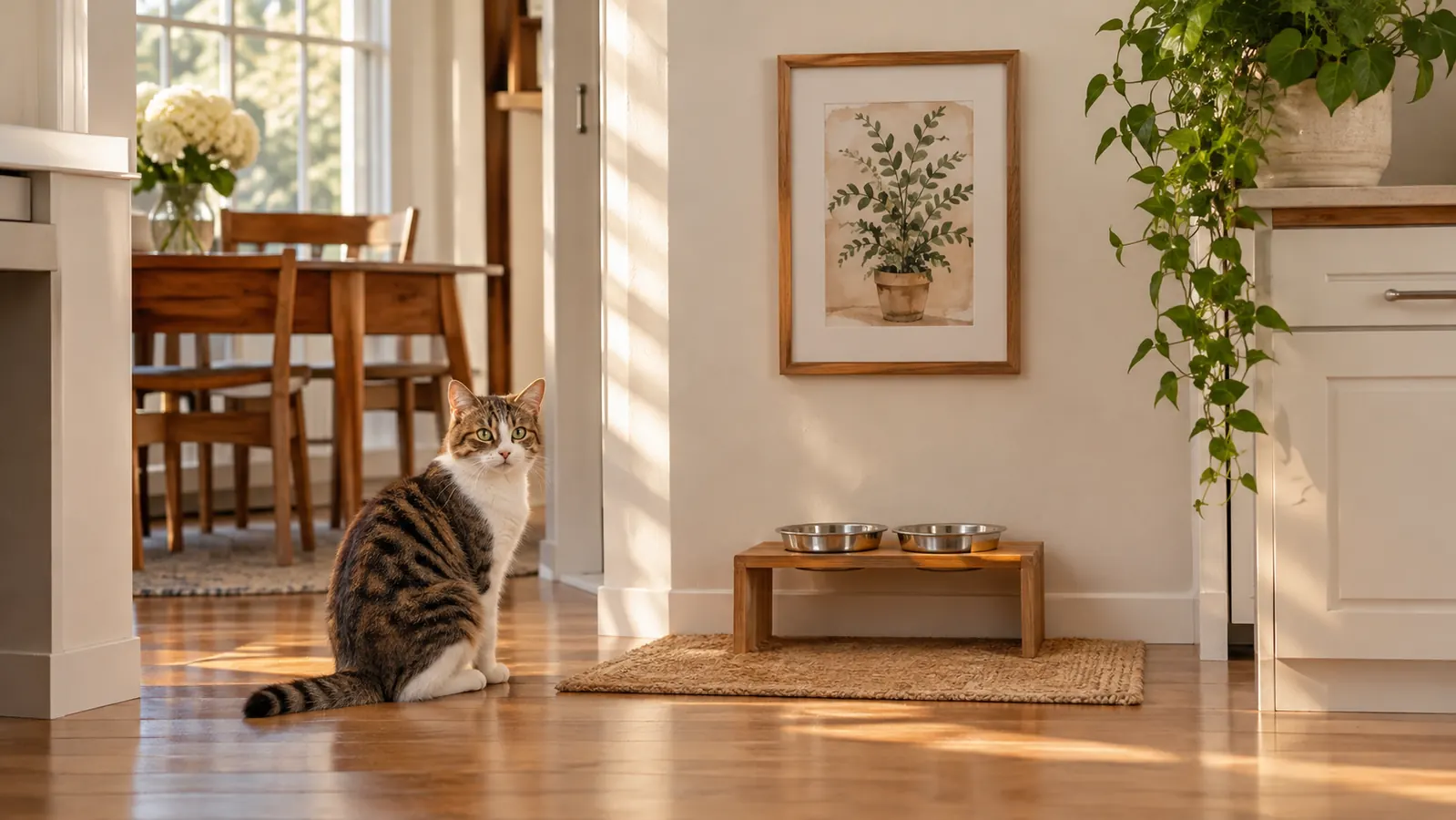
Now the part I actually enjoy. With the mechanics solved, styling the corner takes about ten minutes and very little money. Start with what has to be there: a mat that fits the footprint with an inch of margin, a shallow tray if you want to corral a scoop, and a wall that can take a splash. Then add one thing at eye level so the corner reads as furniture rather than plumbing. A small framed print, a hanging plant well out of splash range, or a single narrow shelf above the stand all do the job.
Then subtract. The bag of food on the floor, the second water bowl nobody drinks from, the scoop lying on the counter, the leash looped over the stand. Every one of those is what makes a feeding area look like a feeding area. Food goes into a sealed container in the pantry, the scoop lives in a drawer, the leash hangs by the door. The AHX set is the only thing I leave out, and that is the entire trick.
If your kitchen is small, resist the urge to hide the station. A bowl tucked behind a door or down a hallway gets forgotten, the water goes stale, and somebody steps in it in the dark. Better to have it out where you pass it twice a day, next to something you already like looking at.
What Else Helps
A few small additions earn their keep. A second mat for rotation, so one can be in the wash while the other is down. A shallow stone or glass tray under the stand if your floor is the kind that marks. A dedicated measuring cup for food kept in the same drawer as the scoop, because eyeballing portions is how pets get round. And a routine: water refreshed morning and night, bowls washed daily, splash wall wiped on Sundays.
If you keep more than one cat, two stations beat one. Cats will guard a single bowl, and a cat who is being stared at while they eat will bolt their food and then bring it back up on the rug you just cleaned. The AHX set works fine as one station for two cats who get along, but if there is any tension at all, split them into separate corners with their own water.
The last thing that helps is being honest about size. The AHX set carries a one year manufacturer warranty and it is built for small animals, cats, small dogs, and a rabbit will use it too. It is not a large dog feeder and it will not hold a big dog's dinner. Buy it for the animal it actually fits, put it where the splash lands on something washable, and it will read as part of the room instead of a bowl on the floor.
A corner that looks finished instead of improvised
Measure your 14.5 inches, pick the hard wall, set the height for the cat or the small dog, and the styling is the easy part. Rated 4.7 across more than 3,600 reviews.
Amazon Check Today's Price on Amazon →